
Obsessive Compulsive Disorder (OCD)
If you experience unwanted thoughts, doubts, images or urges that leave you questioning whether you might be responsible for causing harm, either through your actions or by failing to prevent something bad from happening, you may be struggling with OCD.
OCD can take many forms. Some are more familiar, such as fears about contamination, causing an accident or making a serious mistake. Others are less widely recognised, such as intrusive thoughts about being violent or abusive, or acting in ways that feel deeply inconsistent with your values or sense of who you are.
A heightened sense of responsibility and difficulty tolerating uncertainty can add further layers to the struggle. You may find yourself repeatedly checking, seeking reassurance, mentally reviewing events or trying to neutralise unwanted thoughts, all in an effort to feel certain or prevent something bad from happening.
I find working with people experiencing OCD deeply rewarding. Helping someone move beyond a struggle that has left them feeling powerless to change is incredibly fulfilling.
I still remember one of the first people I worked with: a gentleman in his late 60s who had lived with OCD for over 40 years. With courage and determination, he was able to make remarkable progress in overcoming a lifelong fear within a few months.
His journey remains a powerful reminder that, no matter how long we have struggled or how stuck we may feel, it is never too late to change.
Specialist experience in OCD
I specialised in OCD treatment at two National Specialist Centres: the Centre for Anxiety Disorders and Trauma at the Maudsley Hospital in London and the Anxiety Disorders Residential Unit at Bethlem Royal Hospital.
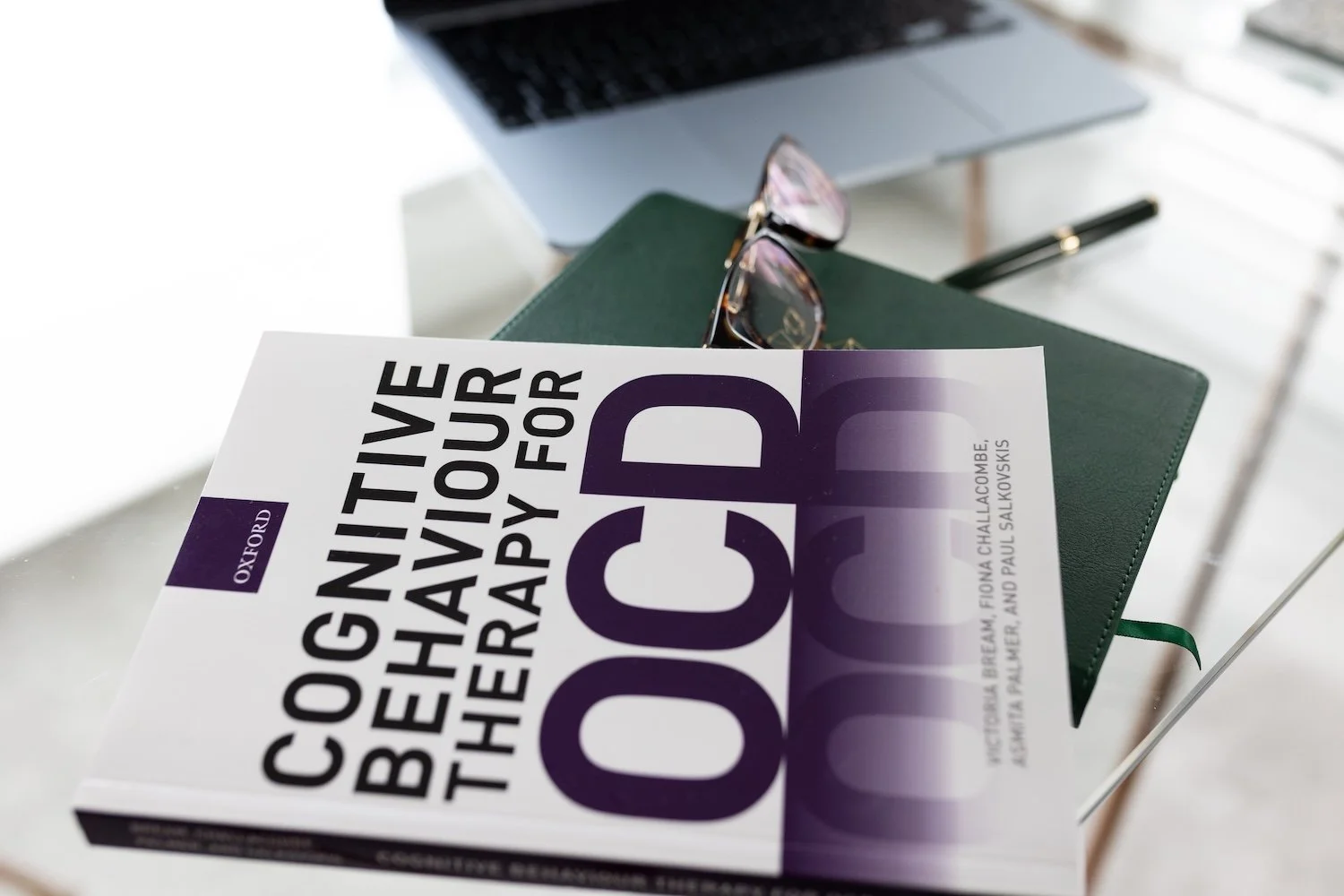
Working with people experiencing many different forms of OCD, alongside leading specialists in evidence-based treatment, gave me a deep understanding of how OCD can affect people in very different ways. I later co-authored a treatment guide for therapists working with OCD with former colleagues from the Maudsley OCD service.
I often combine Compassion Focused Therapy (CFT) with Cognitive Behavioural Therapy (CBT), particularly when OCD is closely linked to shame or self-criticism, or when traditional CBT has not been enough. This approach can help people loosen the grip of OCD while also developing a more compassionate relationship with themselves and others.
What can I expect from a CBT approach?
Together, we will look at some recent examples of the intrusive thoughts you experience and how you currently respond to them. We will develop a shared understanding of what may be keeping the OCD going, and explore what it might be like to approach OCD as a 'worry problem' rather than a 'danger problem'.
This will often involve experimenting with reducing or dropping compulsions, an approach known as Exposure and Response Prevention (ERP).
I appreciate that this can feel daunting. You will never be coerced or pressured into doing anything you are not ready for. Instead, we will work collaboratively and at a pace that feels manageable, using these experiments as opportunities to discover what happens to your anxiety — and to the outcomes you fear — when you step back from your usual 'better safe than sorry' strategies.
Rather than following a rigid, predetermined graded approach or exposure hierarchy, we will identify a starting point that feels sufficiently challenging to be useful while remaining manageable. We will build from there, adapting the pace according to how things are going.
The aim is to help you gradually develop greater confidence in your ability to respond differently to OCD, without allowing it to dictate your choices.
CBT does not aim to get rid of unwanted thoughts (obsessions).
Instead, it aims to change how you respond to them, gradually reducing the power they have over you. You learn to approach intrusive thoughts as something you can experience without having to treat them as dangers that must be prevented or neutralised.
CBT does not simply involve talking about the origins of your OCD or how it affects you.
Although understanding your difficulties is important, CBT for OCD needs to go further. It involves actively testing out what happens when you respond differently to intrusive thoughts and resist the urge to carry out compulsions. CBT incorporating ERP is generally much more effective for OCD than approaches that do not include ERP.
CBT does not aim to convince you that the things you fear are impossible.
Instead, it helps you develop a more balanced perspective, become more comfortable with uncertainty and learn that you do not need absolute certainty in order to get on with your life.
What about medication?
The National Institute for Health and Care Excellence (NICE) recommends CBT incorporating Exposure and Response Prevention (ERP) as an evidence-based psychological treatment for OCD.
Depending on the severity of your symptoms, your preferences and any other mental health difficulties you may be experiencing, you may also benefit from combining CBT with medication.
The medications most commonly prescribed for OCD are SSRIs (selective serotonin reuptake inhibitors), a type of antidepressant that can help reduce OCD symptoms.
For some people, medication can also make it easier to engage with the exposure-based experiments involved in CBT.
We can discuss the potential benefits and drawbacks of medication as part of considering what approach might be right for you. Any decision about starting or changing medication would be made with your prescribing doctor.
Could a compassion-focused approach help me?
If you have completed one or more courses of good-quality CBT incorporating ERP but continue to struggle with OCD — particularly if shame, guilt or strong self-criticism are part of your experience — you may benefit from a compassion-focused approach alongside CBT and ERP.
Compassion Focused Therapy (CFT) can complement CBT by helping to create the emotional conditions that make ERP feel more manageable. It can be particularly helpful if shame or self-criticism makes it difficult to engage with exposure-based work, or if you find yourself being harsh or judgmental towards yourself when experiencing intrusive thoughts that feel deeply at odds with your values or sense of who you are.
Together, we can work on developing a more compassionate way of responding to yourself and to the distress that OCD can bring.
The aim is not to reassure you that your thoughts are harmless, but to help you relate to them — and to yourself — with greater kindness, courage and perspective.

Take the next step
Taking the first step towards therapy can feel daunting. Speaking to a few therapists can help you find someone you feel comfortable working with.
You are welcome to get in touch to arrange a brief telephone consultation, giving us an opportunity to explore whether I might be the right therapist for you.