
Cognitive Behavioural Therapy (CBT)
CBT is an evidence-based psychological treatment for a range of difficulties, including depression, anxiety disorders and post-traumatic stress disorder (PTSD).
It is recommended by the National Institute for Health and Care Excellence (NICE) for a number of common mental health conditions.
CBT helps you make sense of your difficulties by exploring the connections between your thoughts, emotions, physical responses and behaviours.
By developing an understanding of how these influence one another, we can identify the patterns and processes that keep your difficulties going, and work together to find new ways of responding.
Understanding difficult emotions
Whether you are experiencing depression, anxiety, the effects of trauma or difficulties with self-esteem, emotional experiences are rarely straightforward.
We seldom feel one emotion in isolation. Instead, our feelings can be complex, overlapping and changeable — sometimes shifting from one moment to the next, or leaving us feeling several conflicting things at once.
Depression, for example, may involve much more than sadness. You might experience a sense of emotional numbness, anger about what has happened to you, anxiety about the situations you face, or shame and regret about the past.
Understanding the emotions you experience, and how they relate to your thoughts, circumstances and responses, can be an important part of CBT. It can help us make sense of what you are going through and identify ways of responding that are more helpful.
Some common difficult emotions include:
Sadness
Fear and anxiety
Panic and terror
Anger
Guilt
Envy
Disgust
Shame
Common physical responses
When we perceive a threat, the mind and body work together to prepare us to respond. This is an adaptive protective system, designed to help us meet danger.
Sometimes, however, this system can become overly sensitive, responding to situations that are not objectively dangerous, or interpreting uncertainty, discomfort or internal sensations as signs of threat. The resulting physical responses can feel intense, unsettling or difficult to understand.
Developing an understanding of these responses can help reduce the fear they evoke. Through CBT, we can work to recognise these patterns, build greater tolerance for uncomfortable physical sensations, and respond with greater awareness and flexibility — rather than automatically reverting to familiar patterns of avoidance or protection.
Physical responses may include:
Increased heart rate or rapid breathing
Muscle tension or trembling
Sweating
Nausea, dizziness or digestive discomfort
Feeling detached from yourself or your surroundings
Being easily startled or feeling persistently on edge
Fatigue, aches and pains
Changes in appetite or sexual desire
Difficulty sleeping or concentrating
A sense of slowed movement or speech
Ways of coping and responding
When we feel emotionally distressed, physically threatened or caught in unhelpful patterns of thinking, we may instinctively turn to ways of coping that offer a sense of safety or relief in the moment. Some of these responses are known in CBT as safety-seeking behaviours.
Although they may feel necessary, these behaviours can sometimes maintain the very difficulties we are trying to manage. By reinforcing our sense of threat or preventing us from discovering that we can tolerate uncertainty and discomfort, they can keep us caught in cycles of anxiety and distress.
In CBT, we work together to understand these patterns and gradually develop more helpful ways of responding. This may involve reducing reliance on unhelpful safety-seeking behaviours and avoidance, while building greater confidence in our ability to navigate difficult situations.
Common safety-seeking behaviours include:
Seeking reassurance from others
Checking or monitoring for signs of threat, either externally or in your mind
Mentally rehearsing conversations or anticipating what might go wrong
Distracting yourself from uncomfortable thoughts, feelings or sensations
Appeasing others to avoid conflict, disapproval or rejection
Preparing to defend yourself or justify your position
Avoiding situations, people or experiences that feel threatening
Common unhelpful thinking patterns
We all fall into unhelpful thinking patterns from time to time. However, when these patterns become habitual, they can shape how we interpret ourselves, other people and the situations we encounter — often in ways that are biased towards threat, criticism or the expectation that something will go wrong.
These patterns of thinking can intensify emotional distress, activate the body's threat response and lead us to rely on safety-seeking behaviours or avoidance. Over time, these responses can reinforce one another, keeping us caught in cycles of difficulty.
In CBT, we work together to recognise when these patterns may be influencing how we see things, to develop a more balanced perspective, and respond more flexibly. The aim is not to eliminate difficult thoughts, but to reduce their influence when they are unhelpful, so that they no longer continue to fuel your difficulties.
Common unhelpful thinking patterns include:
Catastrophising — anticipating the worst possible outcome
Mind-reading — assuming we know what others are thinking
All-or-nothing thinking — seeing things in absolute terms
Self-blame and self-criticism
Rigid expectations about how we or others should behave
Focusing on what went wrong while overlooking what went well
Jumping to conclusions without sufficient evidence
Emotional reasoning — treating feelings as evidence of how things really are
Overgeneralising from individual experiences
Taking things personally
Specialist CBT training/experience
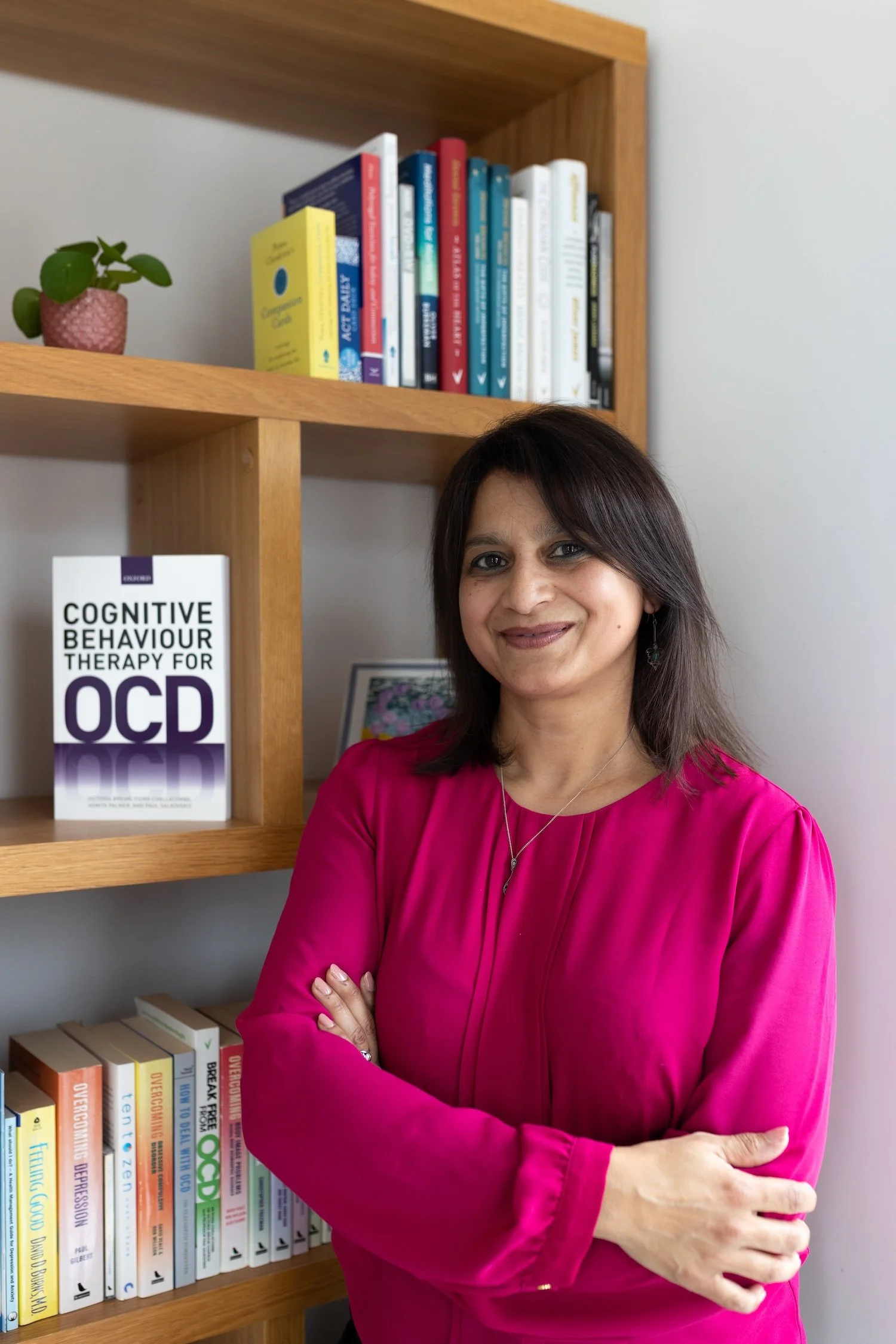
My training in Cognitive Behavioural Therapy began during my Clinical Psychology doctorate in Manchester, where I completed a CBT placement in my final year. After qualifying as a Clinical Psychologist, I went on to obtain a postgraduate diploma in CBT and became an accredited practitioner with the British Association for Behavioural and Cognitive Psychotherapies (BABCP).
Since then, I have worked in national specialist services, including CADAT at the Maudsley Hospital and ADRU at Bethlem Royal Hospital. These services specialise in evidence-based treatment for anxiety disorders and trauma, including working with people who have completed previous courses of CBT without achieving the progress they had hoped for.
Alongside my clinical work, I have co-authored a book with colleagues from CADAT on the use of CBT in the treatment of obsessive-compulsive disorder (OCD).
This combination of specialist training, clinical experience and continued engagement with evidence-based practice informs my approach to therapy, which is tailored to the individual rather than delivered according to a standard formula.


Take the next step
Taking the first step towards therapy can feel daunting. Speaking to a few therapists can help you find someone you feel comfortable working with.
You are welcome to get in touch to arrange a brief telephone consultation, giving us an opportunity to explore whether I might be the right therapist for you.